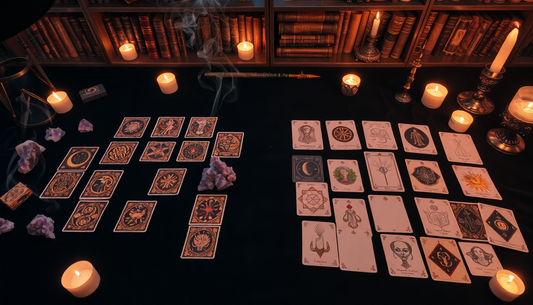
Tarot vs. Oracle Cards: What's the Difference?
When it comes to divination tools and spiritual practices, two names frequently come up in conversation: tarot and oracle cards. While both are used for guidance, insight, and self-reflection, they are distinctly different systems with unique histories, structures, and purposes. Whether you're a seasoned practitioner or someone curious about exploring these tools for the first time, understanding the differences between tarot and oracle cards is essential to choosing the right system for your needs.
At JensonBlake, we believe that knowledge is power, especially when it comes to spiritual practices. This comprehensive guide will explore the nuances between tarot and oracle cards, helping you understand what makes each system special and how to determine which one might be right for you.
Understanding the Basics of Tarot
Tarot is one of the oldest and most structured divination systems in existence. With roots tracing back to 15th-century Italy, tarot cards were originally used as playing cards before evolving into a tool for divination and spiritual guidance. The system has remained remarkably consistent over the centuries, with a standardized structure that distinguishes it from other card-based divination methods.
The Structure of a Tarot Deck
A traditional tarot deck consists of 78 cards, divided into two main sections: the Major Arcana and the Minor Arcana. This structured approach is one of the defining characteristics of tarot and sets it apart from oracle cards.
The Major Arcana comprises 22 cards, numbered from 0 to 21. These cards represent significant life themes, spiritual lessons, and major turning points. Cards like The Fool, The Magician, The High Priestess, The Lovers, The Chariot, and The World are considered the "big players" in tarot readings. They often indicate major life events, profound spiritual lessons, or significant transformations. When Major Arcana cards appear in a reading, they typically suggest that something important is at play.
The Minor Arcana consists of 56 cards divided into four suits: Wands, Cups, Swords, and Pentacles. Each suit contains 14 cards, including ten numbered cards (Ace through Ten) and four court cards (Page, Knight, Queen, and King). The Minor Arcana deals with everyday situations, challenges, and circumstances. The four suits each have their own symbolism and meaning:
Wands represent creativity, passion, energy, and action. They're associated with the element of fire and often indicate movement, growth, and inspiration.
Cups represent emotions, relationships, love, and intuition. Associated with the element of water, cups cards often deal with matters of the heart and emotional well-being.
Swords represent intellect, communication, conflict, and clarity. Associated with the element of air, swords cards often indicate mental challenges, decisions, and communication issues.
Pentacles represent material matters, finances, work, and physical well-being. Associated with the element of earth, pentacles cards often deal with practical, tangible aspects of life.
The Symbolism and Meaning in Tarot
One of the most compelling aspects of tarot is its rich symbolism. Each card contains layers of meaning, imagery, and interpretation. The artwork on tarot cards is intentional and meaningful, with symbols, colors, numbers, and figures all contributing to the card's overall message.
For example, The Magician card typically shows a figure with one hand pointing upward and one pointing downward, symbolizing the connection between the spiritual and material worlds. The infinity symbol often appears above the Magician's head, representing unlimited potential and power. The table before the Magician displays the four suits of the Minor Arcana, suggesting that all tools are at the Magician's disposal.
This level of symbolic depth means that tarot readings can be incredibly nuanced and detailed. A skilled tarot reader can draw upon years of study and intuition to interpret the cards in ways that are deeply meaningful and specific to the person receiving the reading.
How Tarot Readings Work
Tarot readings typically involve shuffling the deck and laying out the cards in specific patterns called spreads. Common spreads include the three-card spread, the Celtic Cross, and the Horseshoe spread. Each position in a spread has a specific meaning, and the cards that land in those positions are interpreted in relation to that position's significance.
For instance, in a three-card spread, the first card might represent the past, the second the present, and the third the future. The reader then interprets each card based on its position and meaning, creating a narrative that addresses the question or situation at hand.
Exploring Oracle Cards
While tarot has a long and established history, oracle cards are a more modern invention. They emerged in the late 20th century as a more flexible and intuitive alternative to tarot. Oracle cards have gained tremendous popularity in recent years, particularly among those seeking a more accessible entry point into card-based divination.
The Structure of Oracle Decks
Unlike tarot's standardized 78-card structure, oracle decks vary widely in size and composition. An oracle deck might contain anywhere from 30 to 60 cards, though some decks have more or fewer. There's no universal standard, which means each oracle deck is unique in its structure and design.
Oracle cards are typically organized around a central theme or concept. For example, an oracle deck might focus on angels, animals, goddesses, affirmations, or chakras. The theme of the deck influences the messages and guidance the cards offer. This thematic approach makes oracle cards highly diverse and allows for the creation of decks that appeal to specific interests and spiritual practices.
The Symbolism and Meaning in Oracle Cards
Oracle cards tend to have more straightforward symbolism compared to tarot. While tarot cards contain layers of historical, astrological, and numerological meaning, oracle cards are often more direct and accessible. The artwork on oracle cards is typically designed to convey a clear message, and the accompanying guidebook usually provides straightforward interpretations.
For example, an oracle deck focused on animals might have a card featuring a butterfly with the message "Transformation" or "Change." The symbolism is clear and direct, making it easier for beginners to understand and interpret the cards without extensive study.
This doesn't mean oracle cards lack depth, however. Many oracle decks contain rich imagery and meaningful symbolism. The difference is that oracle cards tend to prioritize accessibility and intuitive interpretation over the complex, layered symbolism found in traditional tarot.
How Oracle Readings Work
Oracle readings are typically more flexible and intuitive than tarot readings. While some people do use spreads with oracle cards, many practitioners simply draw one or more cards and interpret them based on intuition and the guidebook provided with the deck.
The lack of a standardized structure means that oracle readings can be highly personalized. Some people might draw a single card for daily guidance, while others might lay out multiple cards in a custom spread. The flexibility of oracle cards makes them ideal for those who prefer a more intuitive, less structured approach to divination.
Key Differences Between Tarot and Oracle Cards
Now that we've explored the basics of both systems, let's examine the key differences that distinguish tarot from oracle cards.
Structure and Standardization
The most obvious difference between tarot and oracle cards is their structure. Tarot decks are highly standardized, with every traditional tarot deck containing 78 cards organized into the Major and Minor Arcana. This consistency means that a tarot reader can pick up any tarot deck and understand its basic structure immediately.
Oracle decks, by contrast, vary widely. Each deck is unique in its number of cards, organization, and theme. While this lack of standardization might seem like a disadvantage, it actually allows for greater creativity and diversity in oracle deck design. There are oracle decks for virtually every interest and spiritual path imaginable.
Complexity and Depth
Tarot cards contain centuries of accumulated symbolism, meaning, and interpretation. Learning tarot requires studying the historical context, astrological associations, numerological significance, and traditional meanings of each card. This complexity can be intimidating for beginners, but it also provides a rich foundation for deep, nuanced readings.
Oracle cards are generally more straightforward and accessible. While some oracle decks do contain complex symbolism, most are designed to be intuitive and easy to understand. This makes oracle cards an excellent choice for beginners or those who prefer a more intuitive approach to divination.
Flexibility and Customization
Tarot readings typically follow established spreads and interpretive frameworks. While there's certainly room for intuition and personalization, tarot readings tend to follow a more structured approach. This structure can be helpful for those who prefer clear guidelines and established methods.
Oracle readings are more flexible and customizable. There's no "right way" to do an oracle reading, which means you can adapt the practice to suit your needs and preferences. Some people draw a single card, others use spreads, and still others create their own unique reading methods.
Accessibility for Beginners
For someone completely new to card divination, oracle cards are typically more accessible. The straightforward symbolism and lack of complex historical context make it easier to get started with oracle cards. You can begin drawing oracle cards and interpreting them with minimal study or preparation.
Tarot, while not impossible for beginners, does require more initial investment in learning. Understanding the meanings of 78 cards, the significance of their positions in spreads, and the complex symbolism takes time and dedication. However, many people find this learning process rewarding and enjoy the depth that tarot offers.
Purpose and Application
While both tarot and oracle cards can be used for guidance and insight, they often serve slightly different purposes. Tarot is often used for in-depth readings that explore complex situations, provide detailed guidance, and offer nuanced perspectives on life circumstances. The structured nature of tarot makes it well-suited for comprehensive readings that address multiple aspects of a situation.
Oracle cards are often used for quick guidance, daily inspiration, and intuitive messages. Their flexibility and accessibility make them ideal for brief readings that offer a specific message or perspective. Many people use oracle cards for daily draws, affirmations, or quick check-ins with their intuition.
The History and Evolution of Tarot
To truly understand tarot, it's helpful to know something about its history. Tarot's journey from playing cards to divination tool is fascinating and reveals much about how the system developed its current form.
Origins in Renaissance Italy
Tarot cards originated in 15th-century Italy as a card game called Tarocchi. The earliest known tarot decks were commissioned by wealthy Italian families and featured elaborate artwork. These cards were used for entertainment and gaming, not divination. The structure of the deck, with its Major and Minor Arcana, was established during this period and has remained largely unchanged for over 500 years.
Evolution into a Divination Tool
The transition from game to divination tool happened gradually over several centuries. By the 18th century, tarot cards were being used for divination, particularly in France. French occultists began assigning mystical and spiritual meanings to the cards, drawing connections to Kabbalah, astrology, and other esoteric traditions.
The 19th and 20th centuries saw an explosion of tarot scholarship and innovation. Occultists like Arthur Edward Waite and Pamela Colman Smith created the Rider-Waite tarot deck in 1909, which became one of the most popular and influential tarot decks ever created. This deck's clear symbolism and accessible artwork made tarot more approachable to the general public.
Modern Tarot Practice
Today, tarot is practiced by millions of people around the world. Modern tarot has evolved to incorporate diverse perspectives, including feminist interpretations, LGBTQ+-affirming decks, and culturally diverse versions that draw from non-Western traditions. The core structure of the 78-card deck remains consistent, but the interpretations and applications of tarot continue to evolve.
The History and Evolution of Oracle Cards
Oracle cards are a much more recent development, but they have a fascinating history of their own.
Emergence in the Late 20th Century
Oracle cards emerged in the 1980s and 1990s as a more modern and accessible alternative to tarot. While some earlier divination card systems existed, the oracle card system as we know it today developed during this period. Oracle cards were designed to be more intuitive and less structured than tarot, appealing to people who found tarot intimidating or overly complex.
Growth and Diversification
Since their emergence, oracle cards have experienced explosive growth. The market for oracle decks has expanded dramatically, with hundreds of different decks now available. This growth reflects the appeal of oracle cards' accessibility and flexibility.
Oracle decks have also become increasingly diverse, reflecting the interests and spiritual paths of their creators and users. There are oracle decks focused on angels, animals, goddesses, chakras, affirmations, crystals, and virtually every other spiritual topic imaginable. This diversity means that people can find oracle decks that resonate with their specific interests and beliefs.
Oracle Cards in Contemporary Spirituality
Today, oracle cards are a mainstream tool in contemporary spirituality and self-help practices. They're used by spiritual practitioners, therapists, life coaches, and everyday people seeking guidance and inspiration. The accessibility and flexibility of oracle cards have made them a popular choice for those exploring divination for the first time.
Choosing Between Tarot and Oracle Cards
So which system is right for you? The answer depends on your preferences, goals, and spiritual path.
Consider Your Learning Style
If you enjoy deep study and learning complex systems, tarot might be a good fit. Tarot rewards dedicated study, and many people find the process of learning tarot to be spiritually enriching. The layers of meaning and symbolism provide endless opportunities for exploration and discovery.
If you prefer a more intuitive, less structured approach, oracle cards might be better suited to your style. Oracle cards allow you to rely on your intuition and the guidebook provided with the deck, without requiring extensive study or memorization.
Think About Your Goals
What do you hope to gain from card divination? If you're seeking detailed, comprehensive guidance on complex life situations, tarot's structured approach and depth of meaning might serve you well. Tarot readings can provide nuanced perspectives and address multiple aspects of a situation.
If you're looking for quick inspiration, daily guidance, or intuitive messages, oracle cards might be more appropriate. Their flexibility and accessibility make them ideal for brief, focused readings.
Consider Your Spiritual Path
Your spiritual beliefs and practices might influence which system resonates with you. Some spiritual traditions have strong connections to tarot, while others align more naturally with oracle cards. Consider what feels authentic and aligned with your beliefs.
Start with What Calls to You
Ultimately, the best way to choose between tarot and oracle cards is to follow your intuition. Look at decks from both systems and see which ones call to you. Many people find that they're drawn to one system or the other, and that's a valid way to make your decision.
Using Tarot and Oracle Cards Together
Many practitioners use both tarot and oracle cards in their practice. These systems can complement each other beautifully, offering different perspectives and insights.
Some people use tarot for in-depth readings and oracle cards for daily guidance. Others might use oracle cards to clarify or expand upon tarot readings. The flexibility of both systems means you can experiment and find what works best for you.
Using both systems can also help you develop a more well-rounded divination practice. Tarot teaches you about complex symbolism and structured interpretation, while oracle cards help you develop your intuition and trust your instincts. Together, they create a powerful toolkit for guidance and self-discovery.
Common Misconceptions About Tarot and Oracle Cards
There are several misconceptions about tarot and oracle cards that are worth addressing.
Misconception: Tarot is Predictive
Many people believe that tarot cards predict the future with certainty. In reality, tarot is better understood as a tool for reflection, guidance, and exploring possibilities. Tarot cards show potential outcomes based on current circumstances, but they don't determine the future. You always have the power to make choices and change your path.
Misconception: Oracle Cards are Less Serious
Some people dismiss oracle cards as less serious or legitimate than tarot. This is unfair. While oracle cards are more accessible and flexible than tarot, they can provide profound insights and guidance. The difference in structure doesn't make oracle cards less valuable or effective.
Misconception: You Need Psychic Abilities
Many people believe you need to be psychic to read tarot or oracle cards. This isn't true. While some people are naturally intuitive, anyone can learn to read cards. The cards themselves provide the structure and meaning; your job is to interpret them thoughtfully and intuitively.
Misconception: Card Readings are Deterministic
Both tarot and oracle cards are sometimes viewed as deterministic tools that reveal a fixed future. In reality, these cards are best understood as tools for reflection and guidance. They help you explore your situation, consider different perspectives, and make informed decisions. You're not bound by what the cards show; they're simply offering guidance.
Developing Your Practice with Tarot or Oracle Cards
Whether you choose tarot, oracle cards, or both, developing a consistent practice can deepen your connection to these tools and enhance their effectiveness.
Start with Daily Draws
One of the simplest ways to begin working with cards is to draw one card each day. This practice helps you become familiar with the cards, develop your intuition, and receive daily guidance. Many people find that a single daily card provides just the right amount of insight and inspiration.
Keep a Reading Journal
Keeping a journal of your readings helps you track patterns, develop your interpretive skills, and see how the cards' messages unfold over time. Write down the cards you drew, your interpretation, and any insights that came up. Over time, you'll develop a